How to Protect Your Luggage From Theft and Damage: 9 Pro Tips That Actually Work
My favorite leather weekender got a three-inch gash on its very first flight — not from a thief, but from a baggage belt that caught the strap and tore it open like a cheap envelope. I'd spent more time picking the bag's color than its construction, and I paid for it with a ruined trip to Chicago. That's when I realized most luggage advice is just fashion advice with a safety-wash. Theft and damage aren't separate problems; they're two branches of the same root cause: bags built for shelves, not for sorting facilities. Here are nine things I've learned since that actually keep your stuff safe, whether you're checking a monster roller or shoving a backpack under an airplane seat.
Why Your Luggage Is a Target (And Why Most ‘Protection’ Advice Falls Short)
Let's be blunt about what you're up against. Theft at baggage claim is often a crime of convenience — a stranger grabs a generic black roller and walks out because no one stops them. Damage, meanwhile, is a volume game. The Department of Transportation reported that US airlines mishandled roughly 3 out of every 1,000 checked bags in 2024, and while that includes lost luggage, a significant chunk are bags that come back with crushed corners, snapped wheels, or punctured shells. The advice you usually hear — “buy a bright suitcase” or “use a luggage belt” — helps a little, but misses the bigger picture. A bright bag is easier to spot, sure, but it doesn't stop someone from unzipping the back panel while you're buying a coffee. And a luggage belt won't keep a 50-pound bag from pancaking your carefully packed souvenirs. You need to think in layers: deterrence, reinforcement, and recovery. The nine tips below stack together so that even if one layer fails, the next one holds.
Tip #1: Choose the Right Bag — Hard Shell vs. Soft Shell for Theft and Damage Prevention
I've dragged both types across three continents, and the honest answer is that neither wins outright — you're choosing which vulnerability you can live with. A hard shell polycarbonate suitcase, like those from Away or Monos, distributes impact force across its frame. I once watched a baggage handler drop mine from the top of a loading ramp, and the shell shrugged it off with a scuff the size of a quarter. Theft-wise, hard shells can't be slashed, but those interlocking zippers? Still the weak point. A ballpoint pen can pop most zipper coils in under three seconds. Soft-shell bags, especially ballistic nylon ones from Briggs & Riley or Travelpro, resist abrasion beautifully and often have external pockets — handy for you, but also handy for fingers. If theft is your main fear in crowded hostels or train stations, go hard shell and reinforce the zipper (more on that in Tip #4). If you're mostly worried about overpacking damage and you check your bag, a high-denier soft shell with a structured frame gives you more give before it cracks. My personal rule: for checked bags, polycarbonate hard shell with a clamshell opening; for carry-ons in tight overhead bins, a soft-shell duffel that can squish into odd spaces without crushing its contents.
Tip #2: Lock It Right — How to Use TSA-Approved Locks and Avoid Weak Points
Locking a bag feels like the obvious move, but I see travelers make two mistakes constantly: using a non-TSA lock on a checked bag (which TSA will cut without hesitation) or locking only one zipper pull, leaving the other free to slide around the track. A TSA-approved combination lock from a brand like Travel Sentry works because agents have master keys. The real trick is to lock the two main compartment zippers together, not to the bag's frame. If you lock a single zipper to a stationary D-ring, a thief can still pull the zipper heads apart and open a gap wide enough to slip out a tablet. Zip ties as locks? Fine for a quick tamper seal, but I've had TSA replace a cut zip tie with a fresh one of their own and a note inside my bag. Don't rely on them as a theft deterrent; they're a tamper indicator, not a lock. Also, skip the tiny luggage keys that come with some suitcases — they're laughably generic and easily picked.
Tip #3: The ‘Unpacked’ Strategy — Keep Valuables Off the Radar
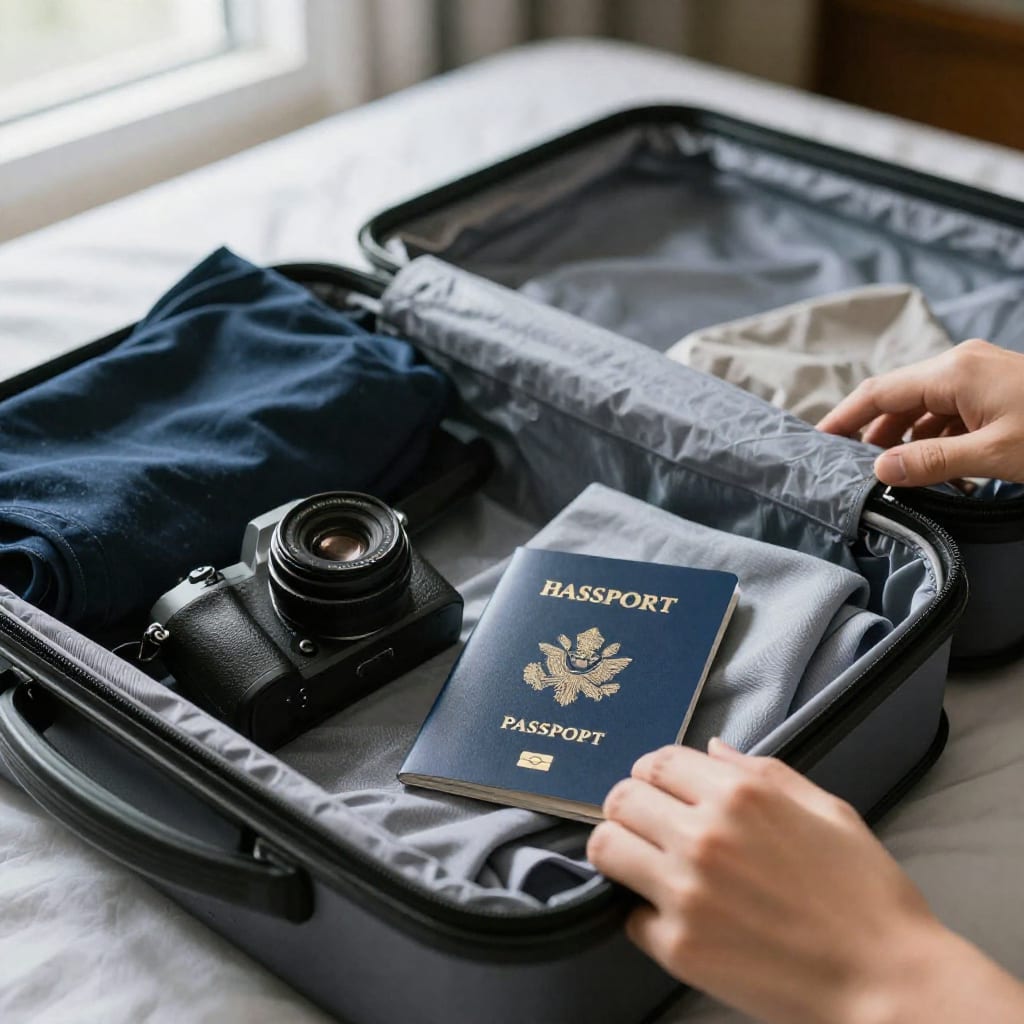
Thieves profile bags before they touch them. A sleek laptop-branded backpack screams “$2,000 machine inside.” A hard case covered in camera brand stickers is a billboard. I've adopted what I call the “unpacked” strategy: my most valuable items travel inside objects that don't look like anything. A small camera body lives inside a padded packing cube buried under a hoodie and a toiletry kit. My laptop slides into a thin sleeve and then into the main compartment of my carry-on, sandwiched between a folded pair of jeans — not in an obvious external laptop pocket. The key is to make the grab-and-run too much work. If someone unzips your bag, they should hit a layer of clothes before they hit anything worth stealing. Packing cubes aren't just organizational magic; they're a theft delay tactic. A thief looking for a quick score won't bother unzipping three separate cubes to find a Kindle. One more thing: never, ever hang your bag on the back of a café chair with the zipper facing outward. I loop a strap around my ankle or chair leg so the opening is pressed against my body.
Tip #4: Reinforce the Zippers — The Weakest Link in Most Bags
The pen trick works because standard coil zippers separate under lateral pressure. On my soft-shell duffel, I replaced the stock zipper pulls with small, keyed-alike padlocks that lock the two sliders directly to each other. For bags where that's not possible, a miniature steel cable tie looped through both zipper heads and tightened gives the same effect — it takes a pair of wire cutters to remove, which is more than an opportunistic thief carries. If you're sewing-inclined, you can add a fabric flap that covers the zipper track entirely, secured with hook-and-loop tape. It looks like a design quirk, but it hides the seam from a quick pen jab. On hard shells, look for bags with “anti-theft” zippers that have a smaller, recessed pull and a locking mechanism that clicks into a housing — these are significantly harder to pop. I've tested the difference at home with a ballpoint pen; the anti-theft zipper survived, the standard one didn't last two seconds.
Tip #5: Use a Luggage Tag That’s Smart — Not Just a Name Tag
A dangling tag with your home address written in big Sharpie letters is an invitation. It tells a baggage handler “this house is empty right now” and gives a thief a handy location. I use a covered leather tag that hides my details; inside, instead of my street address, I list my email, phone number, and a line that says “Reward for return — see inside.” Inside the bag, on a bright piece of paper, I repeat my contact info. For tracking, I slip an Apple AirTag into a fabric holder sewn into the lining of my suitcase. On a trip through Lisbon last spring, my checked bag didn't make the connection; the airline had no idea where it was, but I watched it sit on the tarmac in Madrid for six hours via the Find My app. I told the baggage desk exactly where it was, and it was on the next flight. That alone is worth the $29.
Tip #6: Wrap It Up — Why Shrink Wrap or a Simple Cover Works
Airport shrink wrap isn't just for nervous first-time fliers. For about $15, a tight layer of industrial plastic does three things: it keeps rain and conveyor-belt grime off your bag, it prevents straps and buckles from catching on machinery, and it adds a sticky, noisy barrier that a casual thief won't want to peel off in public. I use it when I'm checking a soft bag with external pockets. A reusable elastic suitcase cover is a cheaper, less wasteful alternative that achieves the same scuff protection. For carry-ons, a simple rain cover — the kind that comes with many hiking backpacks — pulls tight and hides every external pocket, turning a pickpocket magnet into a smooth, featureless lump. It's not Fort Knox, but remember: thieves look for easy access. A wrapped bag is the opposite of that.
Tip #7: Pack Smart for Damage — The ‘Towel Trick’ and Other Padding Methods
Baggage handlers don't gently place your suitcase onto a pillow; they toss it onto a metal belt. The best damage prevention is internal. I wrap any bottle of wine or olive oil in a small travel towel, then slide it into a sealed dry bag. If it breaks, the mess is contained and the towel absorbs the shock. For electronics with screens, I pack them in the center of the bag, surrounded by a “crumple zone” of soft clothing — think of it like a car's engine block, protected from all sides. A hard-sided sunglasses case doubles as a tiny vault for USB drives or jewelry. My favorite low-tech trick: I line the bottom of my checked suitcase with a folded, cheap yoga mat. It adds almost no weight but creates a padded floor that absorbs the vertical shock when the bag is dropped flat. I've watched my bag hit the tarmac from a loader and come up with zero internal damage because the mat took the hit. Fragile items should never touch the outer walls of your bag directly; always keep at least an inch of clothing between them and the shell.
Tip #8: Keep an Eye on It — Strategic Seating and In-Flight Checks
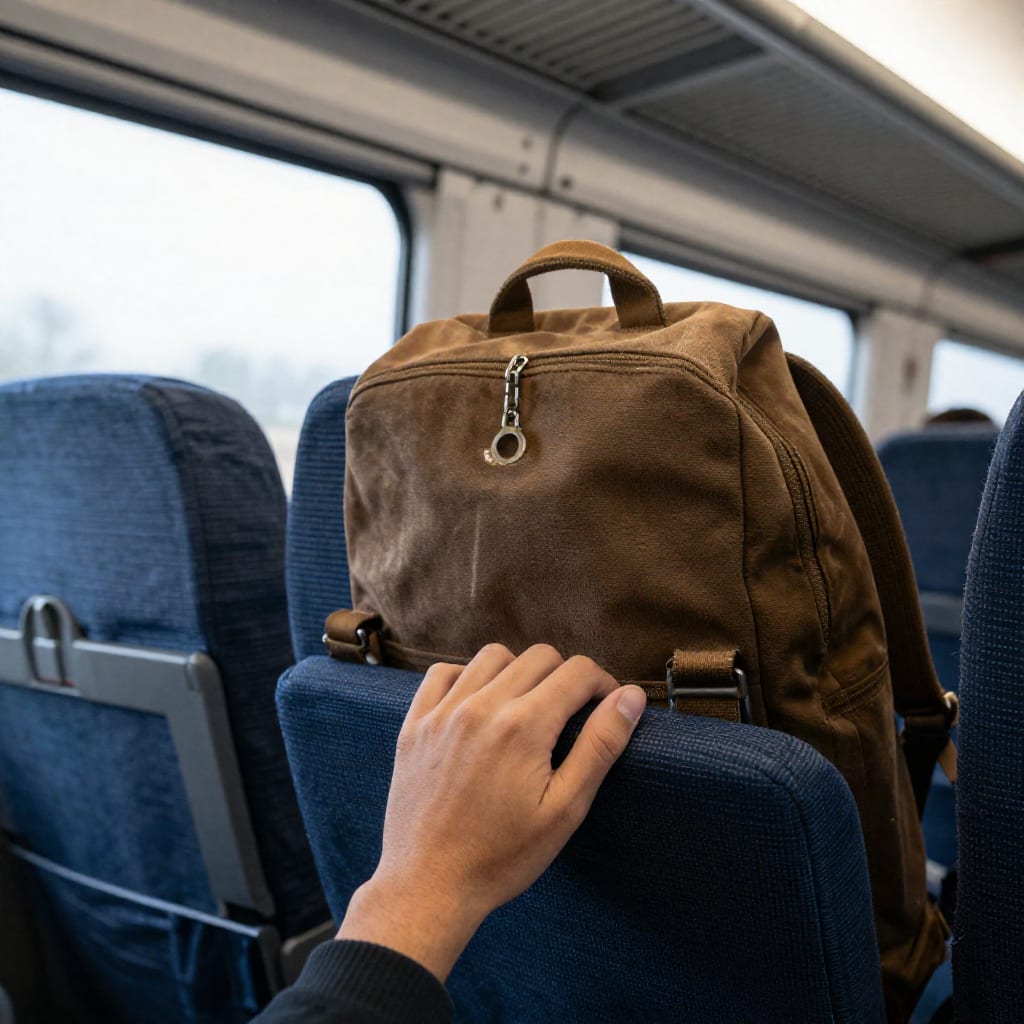
On a train, I sit on the aisle side so I can see the luggage rack without turning around. On a bus, I choose a seat near the front, where the driver's presence deters anyone from opening the under-floor compartments at a stop. For flights, I board as late as possible with my carry-on — if the overhead bins are full near my seat, I'll gate-check the bag rather than stash it three rows behind me where I can't watch it. The “last on, first off” rhythm isn't just about comfort; it minimizes the window during which someone else can rummage through a bin you can't see. And that moment when everyone stands up and stares at the bins after landing? That's prime time for a grab-and-go. Keep your hand on your bag's handle and your eyes on the bin until you pull it down.
Tip #9: Use Insurance — The Safety Net That Actually Pays for Damage or Theft
Even with all these layers, sometimes a bag gets run over — literally — by a baggage tug. I watched it happen to a fellow passenger in Denver. The airline's liability for domestic US flights is capped at $3,800, but they won't pay out unless you file a report before you leave the airport. Walk out the terminal doors, and your claim becomes ten times harder. I take photos of my bag at check-in and again at baggage claim if I see fresh damage. For international trips, I carry a standalone travel insurance policy with a high baggage limit — World Nomads and Allianz both offer plans that cover theft and damage with lower deductibles than airline liability. The real value is in the documentation: photograph your packed bag before you zip it, keep receipts for anything over $100, and screenshot your tracking app showing the bag's location. That combo has gotten me a full replacement for a crushed wheel assembly that the airline initially called “normal wear and tear.”
Final Pro Tip: Combine These for a Layered Defense
No single trick here is bulletproof. A lock can be cut, a tracker can be removed, and a hard shell can still crack under enough force. But stack them: a polycarbonate hard shell (Tip #1) with anti-theft zippers locked together (Tips #2 and #4), wrapped in a bright cover (Tip #6), with valuables buried inside padded cubes (Tips #3 and #7), a covered tag and an AirTag (Tip #5), and a boarding strategy that keeps it in your sight line (Tip #8) — and you've just made your bag the most annoying target on the carousel. Thieves don't want a challenge; they want the easy score. Be the hard one. Worth bookmarking before your next trip, because you won't remember all nine steps at 4 a.m. on the way to the airport.